
STONE
Lapis lazuli
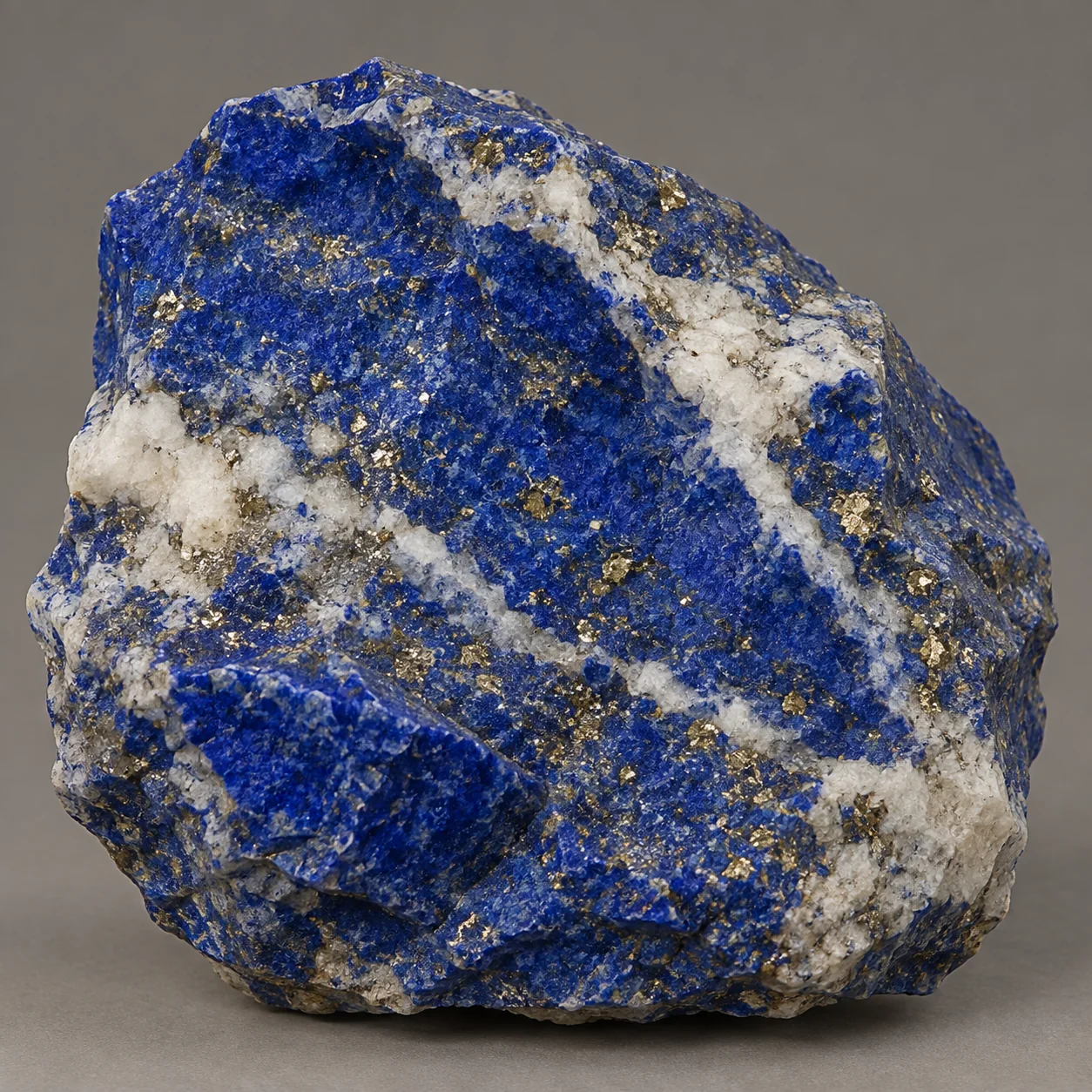
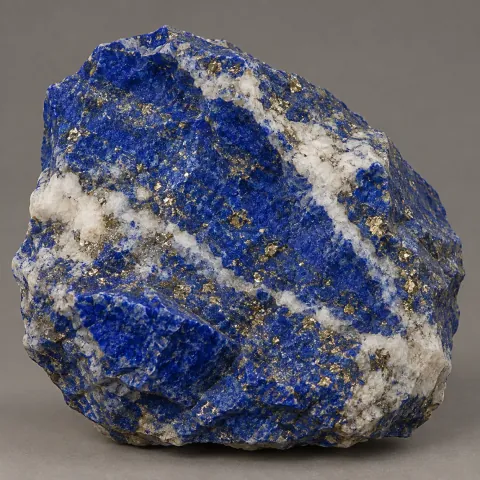
A rock rather than a single mineral: an aggregate mainly of lazurite, calcite and pyrite, prized for its deep blue.
- Typical colour
- Dark blue to violetish blue, sometimes with gold-coloured pyrite flecks
- Also known as
- Lapis · Ляпис-лазурь · Лоҷувард
FOUND IN TAJIKISTAN
Lazurite, the blue mineral of lapis lazuli, is recorded at Lyadzhuar-Dara near Ishkoshim in the South-West Pamir.
Handbook of Mineralogy — LazuriteWHAT IT IS MADE OF
Mineral science
Physical and optical properties belong to the mineral species; see the mineral page for the full sourced profile.
What causes the colour
Lazurite produces lapis lazuli's prized bright royal blue. The most valued material is a uniform dark blue to violetish blue without visible white calcite; small, evenly spread gold-coloured flecks of pyrite can add to its appeal. Lesser amounts of diopside, amphibole, feldspar or mica may also be present.
History and names
Scholars of ancient civilisations believe people have prized lapis lazuli for more than 6,500 years; it was treasured in Mesopotamia, Egypt, China, Greece and Rome. Renaissance painters ground it into ultramarine, an expensive blue pigment of unrivalled brightness and stability.
COLLECTION
Study views
SOURCE
GIA Gem Encyclopedia — Lapis lazuli