
STONE
Spinel
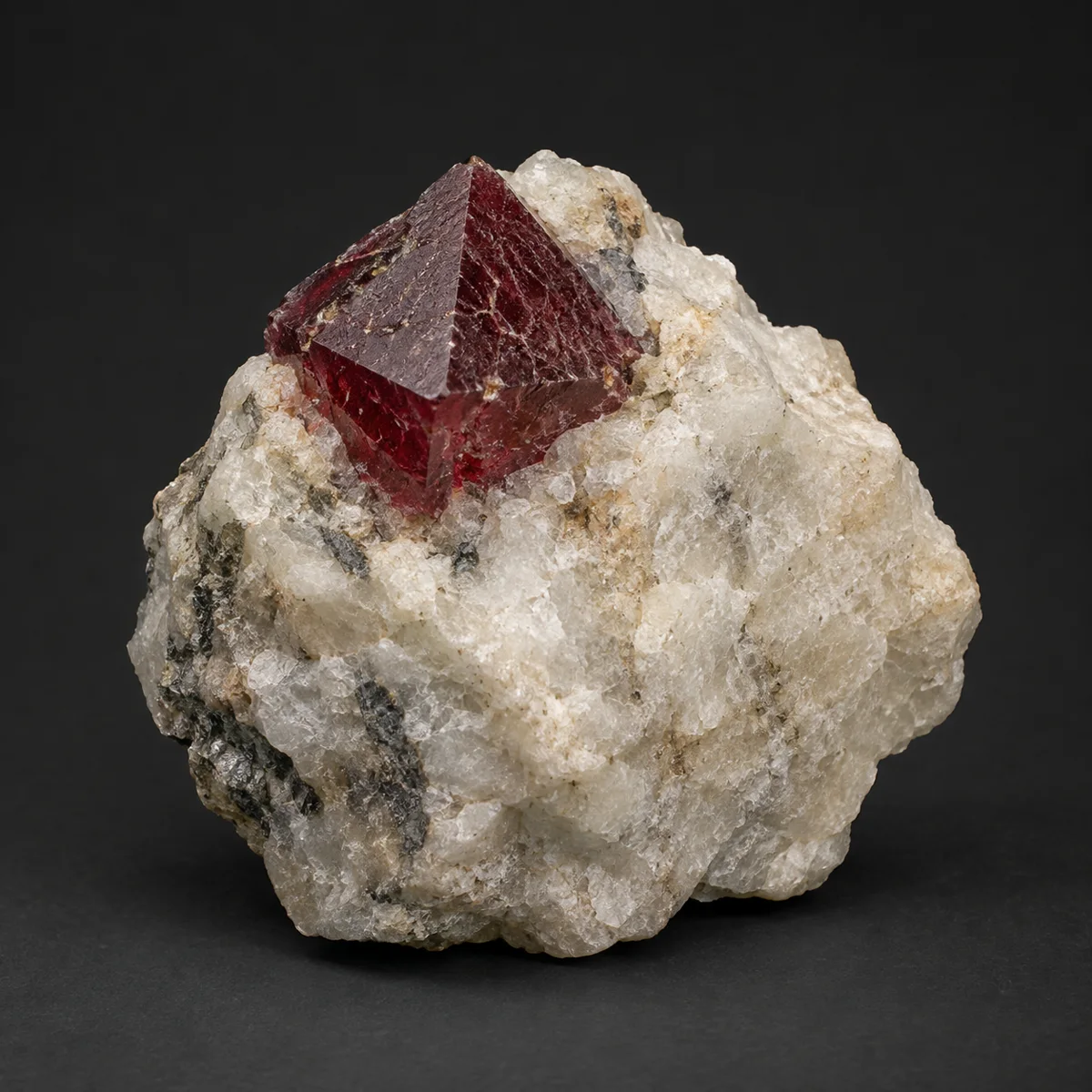
Transparent gem spinel; its red is caused by chromium, the same trace element that colours ruby.
- Typical colour
- Red and pink are classic; also blue, violet and other colours
- Also known as
- Balas ruby · Шпинель · Шпинел
- Birthstone
- August A modern tradition, not a property of the stone. GIA
FOUND IN TAJIKISTAN
Kuh-i-Lal in the Ishkoshim district is the historic source of gem spinel, the "balas ruby" of Badakhshan.
Color Mechanism and Spectroscopic Thermal Variation of Pink Spinel Reportedly from Kuh-i-Lal, TajikistanWHAT IT IS MADE OF
Mineral science
Physical and optical properties belong to the mineral species; see the mineral page for the full sourced profile.
What causes the colour
Red spinel is coloured by chromium, the same trace element that colours ruby and emerald.
Look-alikes and how to tell them apart
Spinel was mistaken for ruby for centuries, and many famous historical "rubies" are spinel — among them the Black Prince's Ruby set in the front of Britain's Imperial State Crown and the Timur Ruby, which weighs over 350 carats and carries several Persian inscriptions. The two were separated scientifically only in 1783, when Jean-Baptiste Louis Romé de l'Isle distinguished them by their crystal shapes (GIA reading list).
Compare with its look-alikesHistory and names
For a thousand years or more, red and rose-red spinels from Central Asia were called "balas rubies". The name is traced to Badakhshan: SSEF derives it from badaxš, the ancient Persian name for the region, while GIA's reading list links it to the town of Balkh. Historic Badakhshan extended far into present-day Tajikistan, and most of these spinels were mined at Kuh-i-Lal, today in Tajikistan near the Afghan border (SSEF), less than a mile from the Pyandzh River (GIA). Project Sang records spinel at Kuh-i-Lal at district precision only.
COLLECTION
Study views
SOURCE
GIA Gem Encyclopedia — Spinel; SSEF — Spinel from Afghanistan; GIA — Historical Reading List: Ruby and Balas Ruby