
STONE
Agate
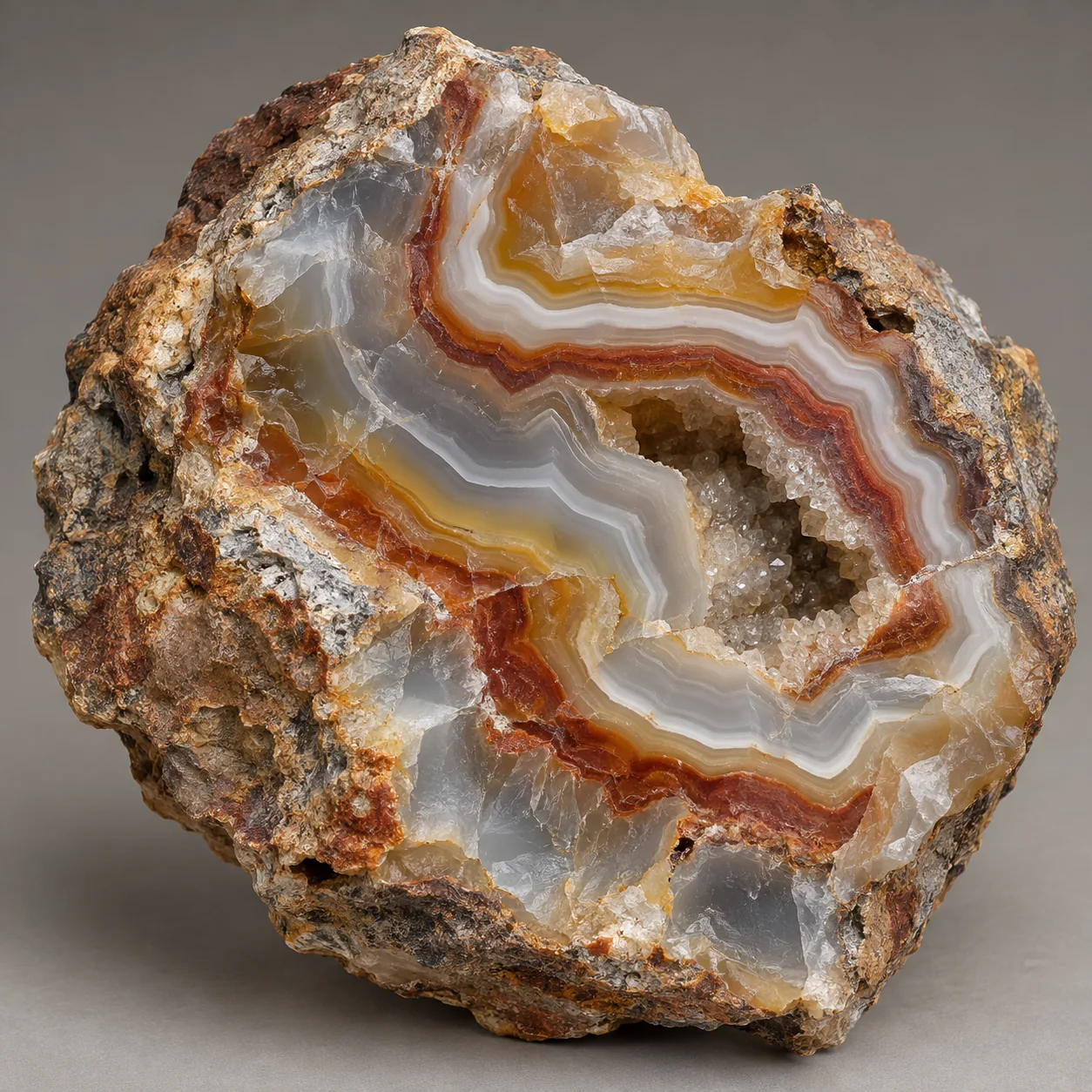
A translucent, usually banded variety of microcrystalline quartz, used as a semiprecious stone and in carvings.
- Typical colour
- Brown, white, red, grey, pink, black or yellow, typically in bands
- Also known as
- Агат · Ақиқ
FOUND IN TAJIKISTAN
Banded chalcedony agate is known from the Adrasman agate occurrence in the Adrasman–Kanimansur ore field and near Dolany village, Sughd region; specimens are held in the Fersman Mineralogical Museum.
Sevastopol Stone Museum — Agate, Adrasman agate occurrence, Sughd regionWHAT IT IS MADE OF
Mineral science
Physical and optical properties belong to the mineral species; see the mineral page for the full sourced profile.
What causes the colour
Agate forms when silica carried by groundwater is deposited in cavities, in concentric layers around the walls or in horizontal layers building up from the bottom. Its colours come from impurities: groundwaters of different compositions seeping into the cavity leave alternating bands that record changes in water chemistry.
Treatments
Agate is porous and readily accepts dye; most of the spectacularly coloured agates sold in the gemstone trade have been dyed.
Look-alikes and how to tell them apart
Some petrified wood is called "agatized wood" and taken for agate, but it is chalcedony.
Compare with its look-alikesHistory and names
Agates were among the earliest stones fashioned by people and have been used for thousands of years. Today they are cut into cabochons, beads, small sculptures and functional objects such as bookends.
COLLECTION
Study views
SOURCE
Geology.com — Agate