
STONE
Peridot
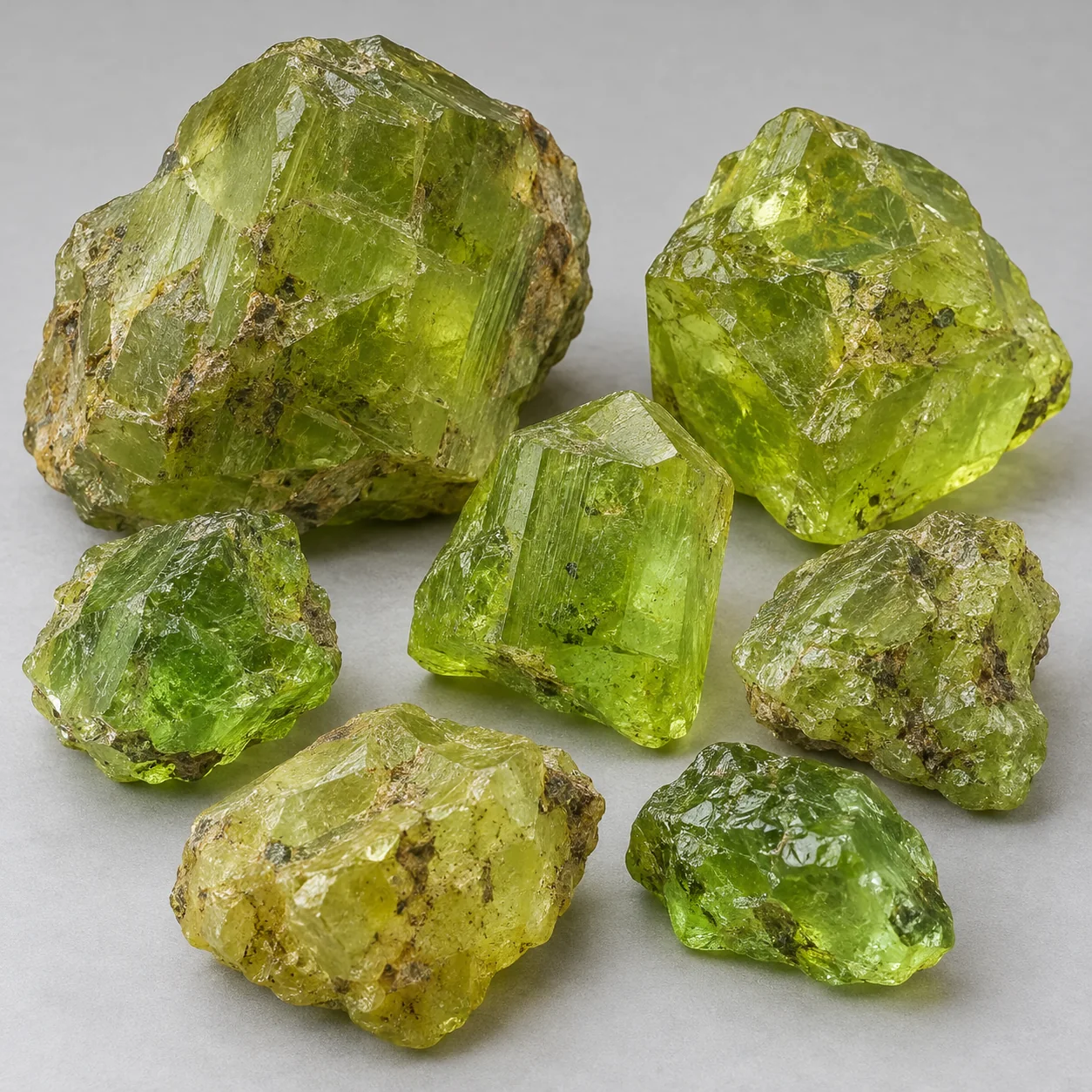
The green, gem-quality variety of olivine. Peridot belongs to the forsterite–fayalite series, and most peridot lies close to its magnesium-rich forsterite end.
- Typical colour
- Yellowish green; the finest is a pure grass green
- Also known as
- Chrysolite · Перидот · Хризолит · Забарҷад
- Birthstone
- August A modern tradition, not a property of the stone. GIA
WHAT IT IS MADE OF
Mineral science
Physical and optical properties belong to the mineral species; see the mineral page for the full sourced profile.
What causes the colour
Unlike most gems, which owe their colour to impurities, peridot is green because of its own composition; olivines closer to the forsterite end tend to be greener.
Look-alikes and how to tell them apart
Green glass is the most common peridot imitation. Synthetic corundum and spinel and cubic zirconia may be passed off as peridot, and natural emerald and demantoid garnet can be confused with it.
Compare with its look-alikesHistory and names
The ancient Egyptians mined peridot on the Red Sea island of Zabargad. Gems from the island were also called chrysolite, Greek for “golden stone”; by the 19th century the name covered several green to yellow-green gems, and gemmologists no longer use it.
COLLECTION
Study views
SOURCE
International Gem Society — Peridot; GIA — Peridot