
САНГ
Забарҷад
Peridot
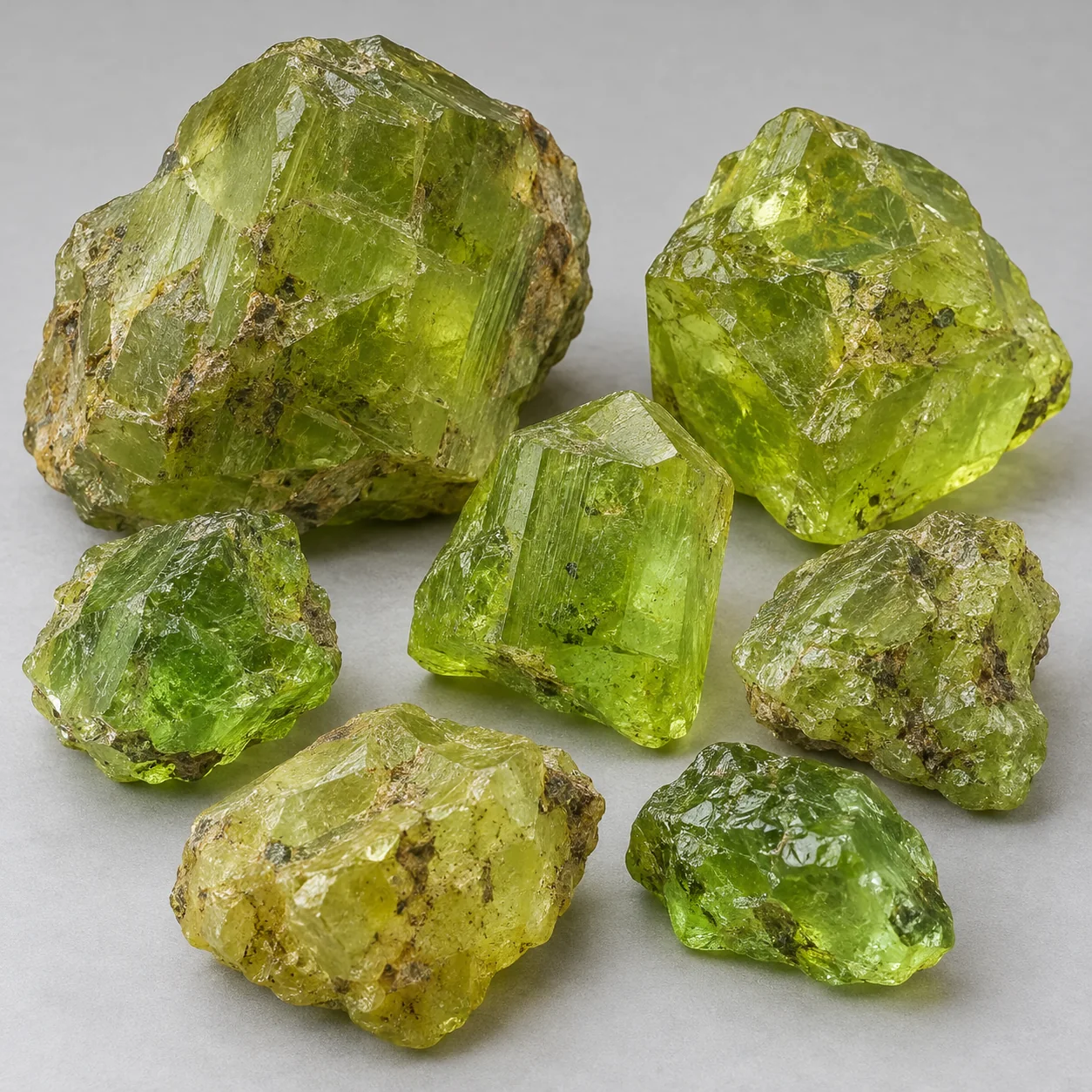
The green, gem-quality variety of olivine. Peridot belongs to the forsterite–fayalite series, and most peridot lies close to its magnesium-rich forsterite end.
Ба забони англисӣ нишон дода шудааст, зеро тарҷумаи бозбинишуда ҳоло дастрас нест.
- Ранги маъмулӣ
- Yellowish green; the finest is a pure grass green
- Номҳои дигар
- Peridot · Chrysolite · Перидот · Хризолит
- Санги моҳи таваллуд
- Август Анъанаи муосир, на хосияти санг. GIA
ТАРКИБ
Мушаххасоти илмӣ
Хосиятҳои физикӣ ва оптикӣ ба навъи минерал бастагӣ доранд; профили пурра бо манбаъҳо дар саҳифаи минерал аст.
Сабаби ранг
Unlike most gems, which owe their colour to impurities, peridot is green because of its own composition; olivines closer to the forsterite end tend to be greener.
Сангҳои монанд ва фарқ кардани онҳо
Green glass is the most common peridot imitation. Synthetic corundum and spinel and cubic zirconia may be passed off as peridot, and natural emerald and demantoid garnet can be confused with it.
Муқоиса бо сангҳои монандТаърих ва номҳо
The ancient Egyptians mined peridot on the Red Sea island of Zabargad. Gems from the island were also called chrysolite, Greek for “golden stone”; by the 19th century the name covered several green to yellow-green gems, and gemmologists no longer use it.
КОЛЛЕКСИЯ
Тасвирҳои омӯзишӣ
МАНБАЪ
International Gem Society — Peridot; GIA — Peridot