
STONE
Ruby
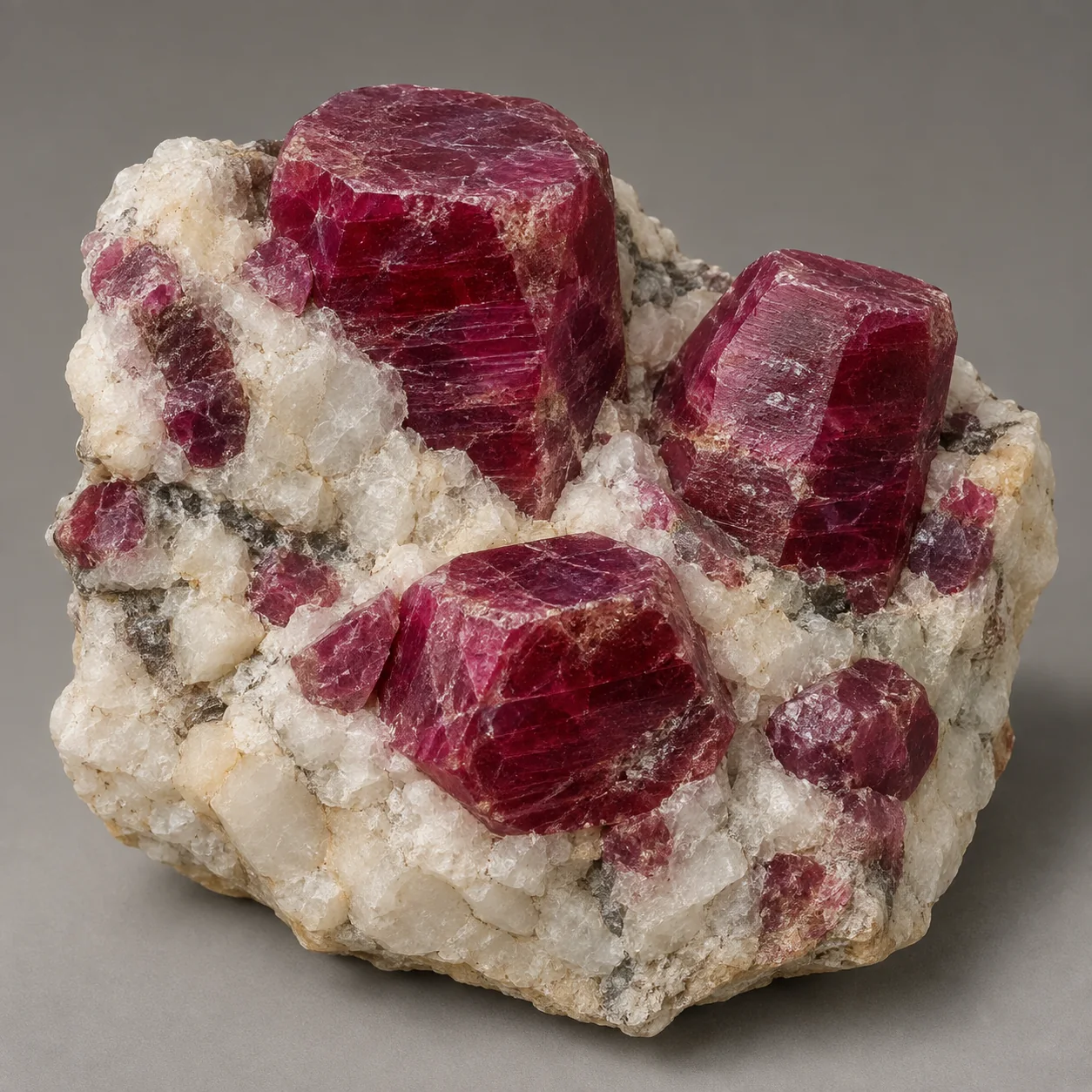
The red gem variety of corundum, coloured principally by chromium.
- Typical colour
- Red to purplish red
- Also known as
- Рубин · Ёқут
- Birthstone
- July A modern tradition, not a property of the stone. GIA
FOUND IN TAJIKISTAN
Gem ruby is documented from the marble-hosted Snezhnoe deposit in the Kukurt district, Eastern Pamir.
Rubies and Sapphires from Snezhnoe, Tajikistan (Sorokina et al., 2015)WHAT IT IS MADE OF
Mineral science
Physical and optical properties belong to the mineral species; see the mineral page for the full sourced profile.
What causes the colour
Chromium is the trace element behind ruby's red, which ranges from orangy red to purplish red; more chromium gives a stronger red. Chromium also makes ruby fluoresce red, which intensifies its colour. Rubies formed in marble, such as those from Myanmar, the Himalayas and northern Vietnam, contain little iron, so their red is especially intense.
Treatments
Ruby can be treated to change its colour, apparent clarity or durability. GIA research has documented low-temperature heating, flux healing of fissures, and filling of fractures with glass.
Look-alikes and how to tell them apart
Red spinel is coloured by the same element, chromium, and was mistaken for ruby for centuries (see Spinel). Laboratory-grown ruby, with essentially the same chemical, physical and optical properties, also exists.
Compare with its look-alikesHistory and names
In Sanskrit, ruby is ratnaraj, "king of gems". Myanmar's Mogok valley is the legendary source of many of the world's finest rubies. The first laser, built in 1960, used the red light emitted by ruby.
COLLECTION
Study views
SOURCE
GIA Gem Encyclopedia — Ruby