
STONE
Precious opal
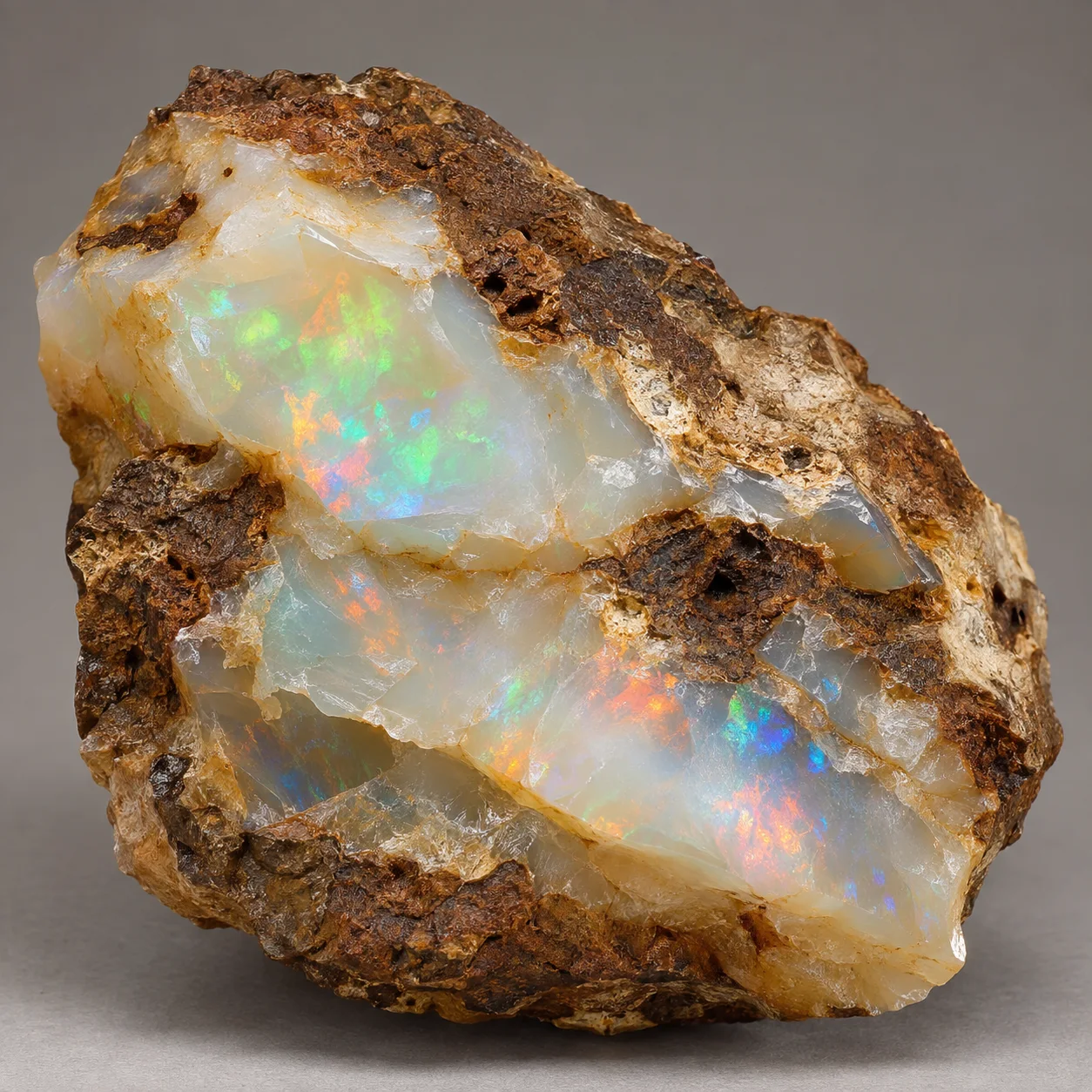
Opal whose ordered silica structure produces play-of-colour through diffraction.
- Typical colour
- Variable body colour with spectral play-of-colour
- Also known as
- Благородный опал · Опали асил
- Birthstone
- October A modern tradition, not a property of the stone. GIA
WHAT IT IS MADE OF
Mineral science
Physical and optical properties belong to the mineral species; see the mineral page for the full sourced profile.
What causes the colour
Play-of-colour comes from diffraction of light by tiny silica spheres stacked in an orderly grid; spheres about 0.2 microns across produce red flashes. Opal is hydrated silica and can hold up to 20% water in its structure.
History and names
The Romans considered opal the most precious and powerful of gems, and Bedouin tradition held that opals fell from the sky in thunderstorms. Commercial mining in Australia began in the 1890s and made it the world's main source. Walter Scott's novel Anne of Geierstein (1829) gave opal a reputation for being unlucky.
COLLECTION
Study views
SOURCE
GIA Gem Encyclopedia — Opal