
САНГ
Опали асил
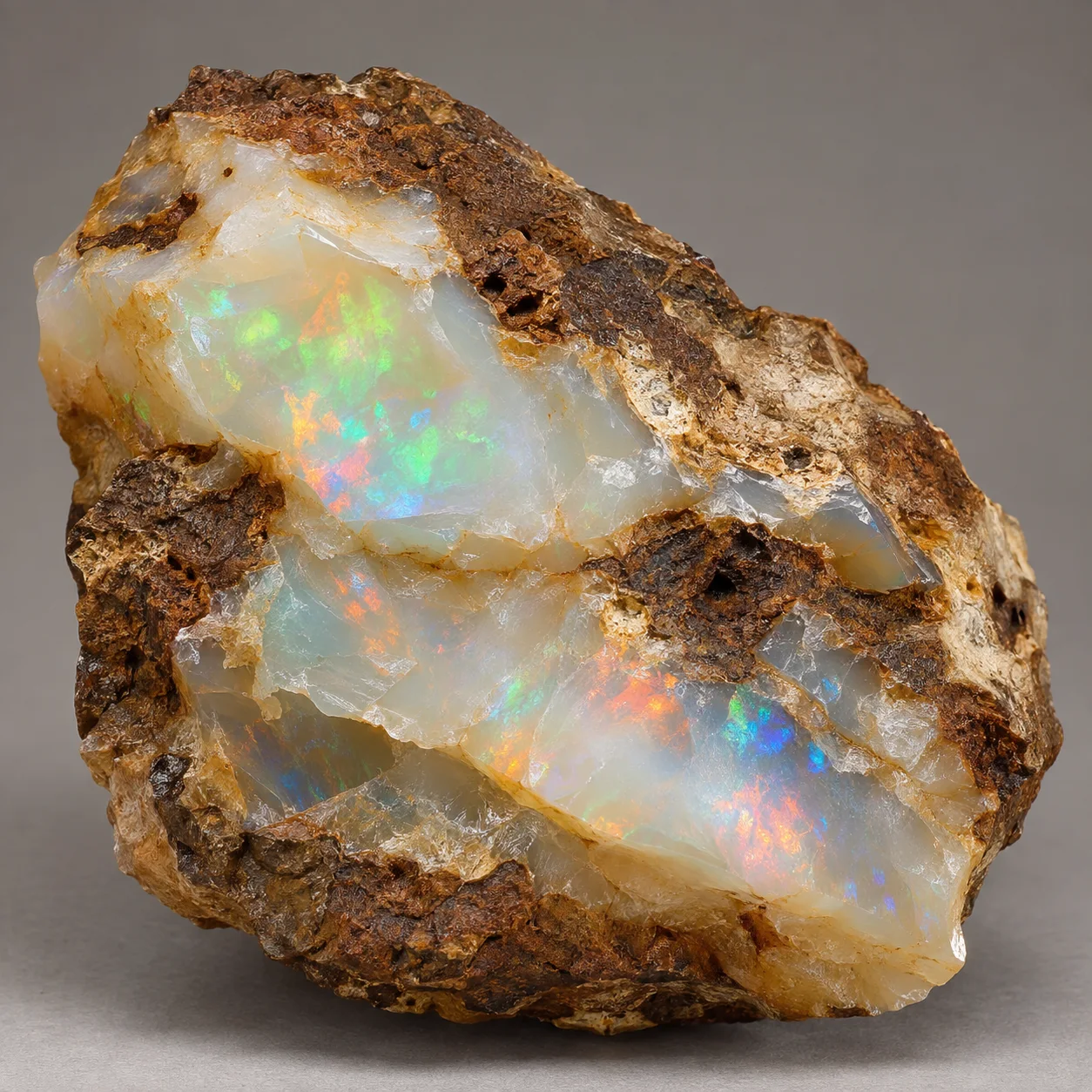
Precious opal
Opal whose ordered silica structure produces play-of-colour through diffraction.
Ба забони англисӣ нишон дода шудааст, зеро тарҷумаи бозбинишуда ҳоло дастрас нест.
- Ранги маъмулӣ
- Variable body colour with spectral play-of-colour
- Номҳои дигар
- Precious opal · Благородный опал
- Санги моҳи таваллуд
- Октябр Анъанаи муосир, на хосияти санг. GIA
ТАРКИБ
Мушаххасоти илмӣ
Хосиятҳои физикӣ ва оптикӣ ба навъи минерал бастагӣ доранд; профили пурра бо манбаъҳо дар саҳифаи минерал аст.
Сабаби ранг
Play-of-colour comes from diffraction of light by tiny silica spheres stacked in an orderly grid; spheres about 0.2 microns across produce red flashes. Opal is hydrated silica and can hold up to 20% water in its structure.
Таърих ва номҳо
The Romans considered opal the most precious and powerful of gems, and Bedouin tradition held that opals fell from the sky in thunderstorms. Commercial mining in Australia began in the 1890s and made it the world's main source. Walter Scott's novel Anne of Geierstein (1829) gave opal a reputation for being unlucky.
КОЛЛЕКСИЯ
Тасвирҳои омӯзишӣ
МАНБАЪ
GIA Gem Encyclopedia — Opal